Vinyl vs Fiber Cement Siding for Minnesota Homes
You're trying to decide between vinyl and fiber cement siding for a Minnesota home, and you want a straight answer before a salesperson steers you toward whatever carries the highest margin. Here it is, from someone who has hung both across the Twin Cities since 2001: for our climate, the material you pick matters less than most people think, and the install matters far more. Vinyl and fiber cement both survive Minnesota winters when they're put on correctly, and both fail early when they aren't. This guide walks the real trade-offs the way we'd explain them standing at your wall, and we're licensed here under MN #BC773859, so we live with the results.
Most comparison articles you'll find rank the two materials head to head, as if one wins everywhere. That framing misses what actually breaks siding in Minnesota. Our walls swing from below-zero January mornings to sunny 40-degree afternoons in the same week, and every year they run from sub-zero to ninety-plus. That constant expansion and contraction, not the material's spec sheet, is what opens seams, cracks caulk, and lets water behind the wall. So the honest question isn't "which siding is best." It's "which siding fits your home, your budget, and how much upkeep you want, and who's installing it."
Vinyl vs fiber cement siding in Minnesota: the short answer
For most Minnesota homes, modern vinyl is the value pick: it never needs painting, it won't rot, and installed over continuous rigid foam it meaningfully tightens the wall against January wind. Fiber cement, such as James Hardie, is the durability pick: it's dimensionally stable in freeze-thaw, non-combustible, and holds factory color for decades, at a higher material and labor cost. Neither is wrong. The right one depends on your home and how long you plan to own it.
Here's the pattern we see on tear-outs across the metro. When siding fails early here, it's rarely the material's fault. It's a rushed install: vinyl nailed tight so the panel can't move through temperature swings, or fiber cement with unsealed cut edges and fasteners driven outside the nailing zone. Both are install mistakes, not material mistakes.
That's the lens to carry through the rest of this guide. Judge the crew as hard as you judge the product, because in our climate the crew decides how long either one lasts.
Which holds up better in Minnesota freeze-thaw?
Both materials survive Minnesota freeze-thaw when installed right, but they get there differently. Fiber cement barely moves as temperatures swing, so caulk joints and butt seams stay tight winter after winter. Vinyl moves a lot with temperature, which is fine as long as it's hung to float rather than nailed down. The failure modes are different, and knowing them tells you what to watch for.
Fiber cement's edge is dimensional stability. Made from cement, sand, and cellulose fiber, it expands and contracts very little across our temperature range, which is why it's earned a reputation on higher-end Minneapolis remodels. James Hardie even engineers its boards and finishes for cold, wet northern climates rather than selling one national product. On a wall that sees hard freeze-thaw cycling, that stability is the whole argument.
Vinyl's durability is really about respecting movement. Good vinyl doesn't fail on a Minnesota home; rushed vinyl does. Panels grow and shrink across a range that runs from below zero to ninety-plus in a single year, so they have to be hung loose, with fasteners left slightly proud so the panel can slide, and every window and penetration needs its J-channel and flashing. Do that, and UV-stabilized vinyl holds its color and stays sealed for decades. Skip it, and you get buckled panels and leaks, no matter how good the box says the product is.
Maintenance: what each one asks of you over the years
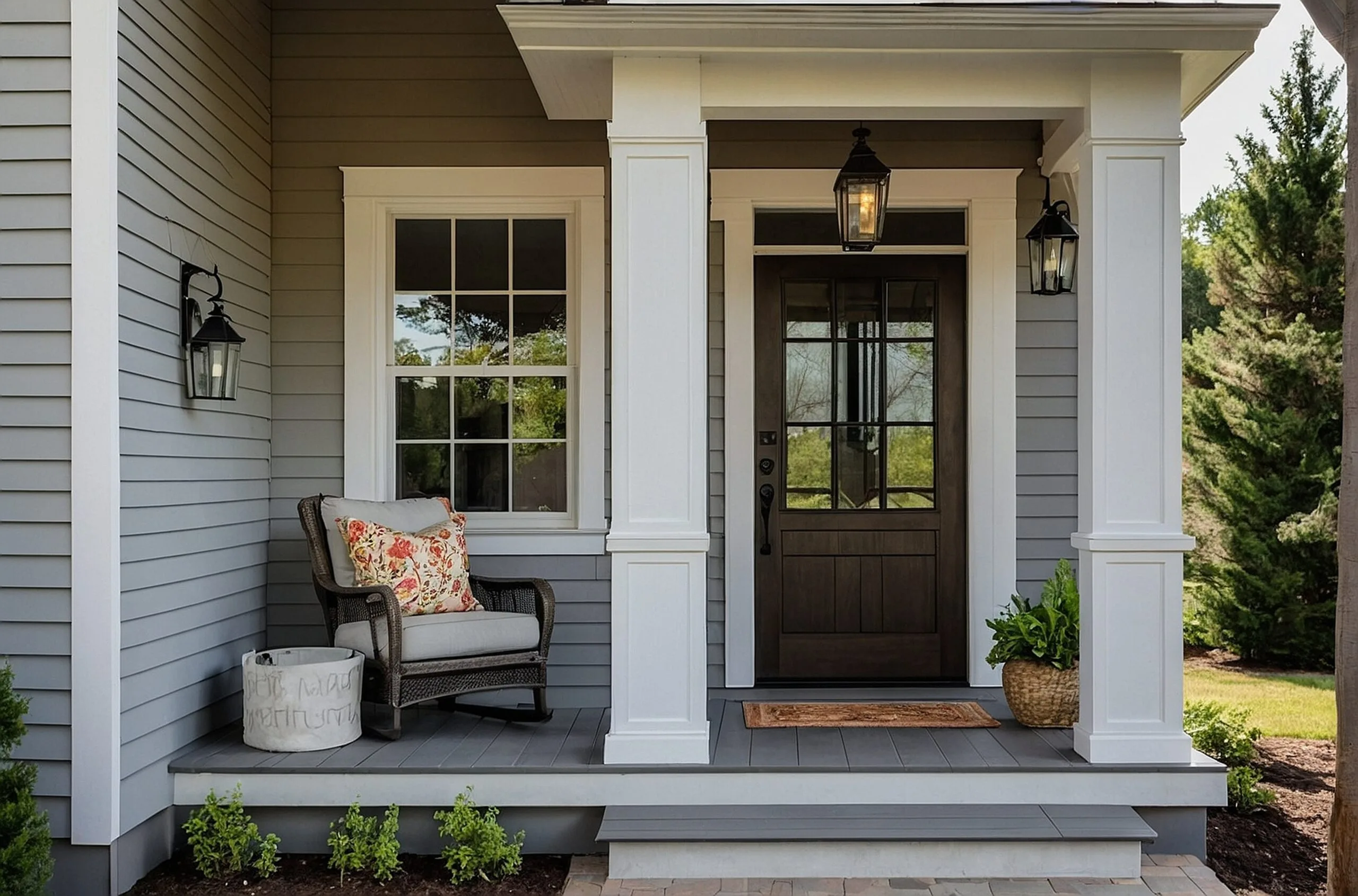
If low upkeep is your priority, vinyl asks the least of you. There's no painting, ever, because the color runs through the material instead of sitting on top as a coating. It shrugs off dirt, and a rinse with a garden hose once or twice a year is most of the maintenance it will ever need. It won't chip or peel because there's nothing on the surface to peel.
Fiber cement is close behind, but not maintenance-free. It never rots and won't feed insects, and factory-finished board holds color for a long time. The trade-off is that its painted finish, while durable, is still a finish. Somewhere down the road, likely well over a decade out, it can want repainting, and caulk joints should be checked periodically like they should on any siding.
A few plain comparisons to weigh:
Vinyl: no painting, occasional rinse, replace a cracked panel if one ever gets hit.
Fiber cement: periodic caulk check, eventual repaint far down the road, no rot or insect worry.
Both: keep grade and gutters directing water away, and don't let landscaping trap moisture against the wall.
For a lot of Twin Cities homeowners, the deciding factor here is simple. If you never want to think about your siding again, vinyl edges it. If you'll accept a repaint decades out in exchange for a tougher, longer-lived board, fiber cement is worth the extra.
Cost trade-offs without the sales spin
Vinyl is the more cost-effective material and the faster install, which is a real part of the total price. Fiber cement costs more for the board itself and more to install, because it's heavier, slower to cut and hang, and more demanding to do correctly. We're not going to put invented numbers on your project here, because the honest range depends on your home's size, wall condition, how many corners and windows you have, and whether you're going over foam. A real number comes from a walkthrough, not an article.
What we can tell you is where the money goes and why the gap exists. Fiber cement's higher labor cost buys careful work: cut edges have to be sealed, fasteners have to land in the nailing zone, and every penetration needs proper gapping and flashing, or the manufacturer warranty is compromised. That's skilled, slower labor, and it's the reason we install fiber cement with our own trained crew rather than subbing it out to a day crew.
Think about cost across the time you'll own the home, not just the day you write the check. Vinyl's lower upfront cost is genuine and often the smart call, especially on a home you may not keep for decades. Fiber cement's higher cost buys the longest service life and the tightest seams over time. Either way, the cheapest quote that skips flashing or rushes the fastening is the most expensive siding you can buy, because you pay again when water gets behind it.
Which siding suits which Minnesota home?
The best fit depends on the house in front of us, not a rule that applies everywhere. A few honest matchups from 25 years of installs around the metro.
The 1950s rambler or postwar story-and-a-half: these make up a big share of the Twin Cities' housing stock, and modern vinyl over continuous rigid foam is often the smartest upgrade. It transforms curb appeal, cuts heating and cooling load, and seals out the January wind the original wood lap never stopped, all at a cost that fits most budgets.
Tight-lot neighborhoods like parts of Northeast Minneapolis and Linden Hills: where homes sit close together, fiber cement's non-combustible rating stops being a brochure line and becomes a genuine consideration. On a tight lot line, fire-resistant cladding matters.
Higher-end remodels and long-term homes: if you're staying put and want the look, the longevity, and the tightest seams over decades, fiber cement is the strongest performer in our climate and worth its premium.
And here's the honest caveat, the kind a lot of siding companies won't put in writing. If your existing siding is sound and only a small area is damaged, you may not need a full re-side at all. A targeted repair or partial replacement can be the right call, and we'll tell you that on a walkthrough rather than selling you the whole wall. We're not a single-material shop and we don't work on commission to push one product, so the recommendation you get is the one that fits your home.
If you want that straight assessment, that's exactly what a free in-home estimate is for. We'll bring sample boards of both vinyl and fiber cement so you can compare them against your roof and trim in your own light. Call us at (612) 445-4352, Monday through Friday 9am to 8pm and Saturday 10am to 2pm, or read more about our Twin Cities siding installation services to see how we work.